





Date:
January 23, 2026
Author:
Ian R. Cohen
/
Founder & Principal Attorney
You invited AI bots into your meetings to boost productivity, but didn't anticipate the high price of a permanent, searchable record. It’s time to rethink the "always-on" transcription.
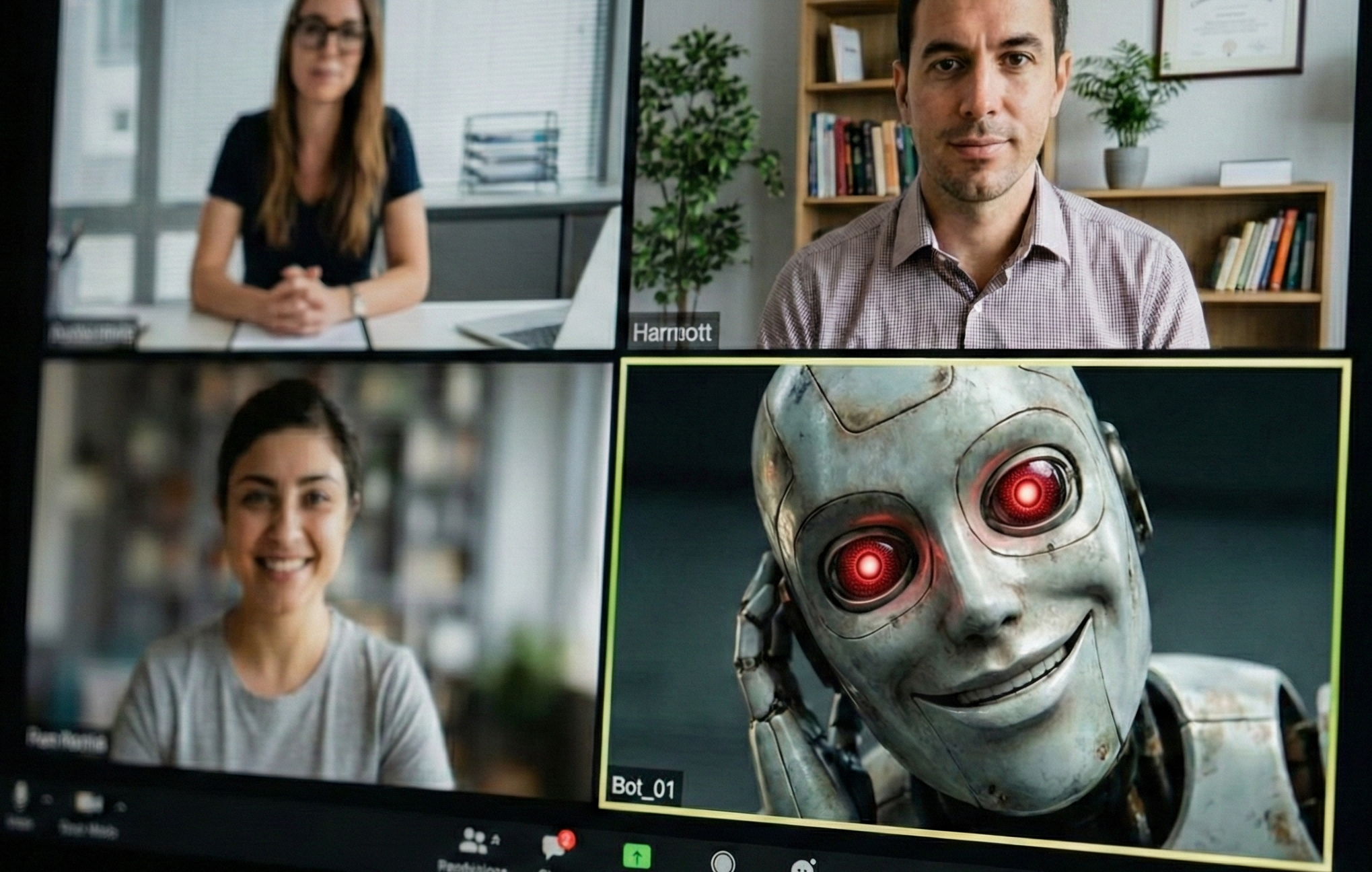
It has become standard corporate operating procedure in 2026. You join a video call, and a few seconds later, a digital attendee pops up. An "AI Companion" or "Notetaker Bot."
At first, it felt like a productivity miracle. No more frantic typing, no more forgotten action items, and a perfect summary delivered to your inbox minutes after the call ends. You embraced efficiency!
But as the novelty has worn off and the legal realities set in, a darker side to these ubiquitous digital scribes is emerging. By turning every casual sync into a real-time sworn deposition and every sales pitch into contractual evidence, you are creating massive legal exposure and eroding the human foundation of business.
Before you invite an AI bot to your next sensitive leadership meeting, investor pitch, or client negotiation, consider what you are actually sacrificing.
The "E-Discovery" Trap: A Litigator’s Dream
The most immediate danger of AI notetaking is the creation of a permanent, verbatim, and highly searchable record of everything.
In the past, meeting notes were subjective summaries. If a manager made an off-color joke, expressed doubt about a product's readiness, or vented frustration about a client, it rarely made the official minutes. It was ephemeral.
Today, AI catches every syllable.
For corporate legal counsel, this is a nightmare scenario. In 2026, litigation discovery isn't just about searching emails; it’s about searching the transcripts of every daily morning sync, every investor call, and every sales presentation.
If your company faces a lawsuit, be it for fraud, breach of contract, securities violations, or employment discrimination, plaintiffs' attorneys will immediately subpoena these records and in some instances already have them.
Making Fraud Claims Easier
Did an executive jokingly suggest "massaging the numbers" during a budget call? The AI transcribed it. In a fraud investigation, that transcript is no longer a joke; it’s "Exhibit A," providing the kind of smoking-gun evidence that was previously incredibly rare.
Sales Calls: Your Promises On the Record
For customer sales calls, AI notetakers create a particularly dangerous trap. Every promise made, every timeline quoted, every capability discussed is now documented with timestamps.
When you close that deal and don't deliver exactly as promised, whether due to scope changes, technical limitations, or simple miscommunication, clients can wave those recordings like a get-out-of-jail-free card, seeking discounts, refunds, termination or worse.
Sales teams often speak enthusiastically and aspirationally. They paint the best-case scenario. When an AI bot is transcribing every word, that sales optimism transforms into documented commitments that can haunt you for years and cost you clients.
Investor Calls: Securities Law Nightmares
Perhaps nowhere is the risk more acute than on investor calls and fundraising pitches. Whether you're speaking with venture capitalists, private equity firms, or public market investors, AI transcripts create serious securities law exposure. Did a founder overstate user growth metrics during a pitch? Did a CFO express more confidence about a product timeline than the engineering team warranted? These statements, when transcribed and time-stamped, become evidence in securities fraud cases.
During M&A transactions or investment due diligence, opposing counsel will demand every AI transcript from relevant investor and board discussions. What seemed like normal business optimism in the moment can be reframed as fraudulent inducement when a deal goes south.
No More "Off the Record"
The concept of an off-the-record conversation is effectively dead if an AI bot is present. You must assume that every word spoken in the presence of an AI tool can and will be used against you in a legal or regulatory proceeding.
The Death of Candor
Beyond legal risks, the psychological impact of constant surveillance is profoundly damaging to company culture and business relationships.
Human beings behave differently when they know they are being recorded. This is known as the "observer effect." When attendees see that a bot has its own square in the video call, a psychological shift occurs. They become guarded.
The "Chilling Effect" sets in:
- Difficult but necessary conversations about underperformance are avoided because managers don't want a transcript of the tension.
- Wild, innovative brainstorming stops because people are afraid of having their "bad ideas" immortalized in text and video clips.
- People stick to scripts and corporate platitudes rather than speaking their minds.
When you introduce an AI notetaker, you are implicitly telling the participants: "Everything you say here will be scrutinized." The result is a sterilized meeting environment where genuine candor goes to die.
Stunting Relationship Development
Business runs on relationships, and real relationships are built in the messy margins: the vulnerable admission of a mistake, the shared frustration over a hurdle, or the nuanced tone of voice that says more than words ever could.
When we rely on AI transcripts as the source of truth, we flatten human interaction into data. We lose the context. We lose the trust that is built when two people share something in confidence.
If people feel they cannot be authentic without creating a "discoverable record," they will retreat into professional aloofness. They will stop trusting their leaders and their peers. The result is "artificial harmony," a polite surface-level cooperation that masks deep dysfunction because no one is brave enough to say what they really think on the record.
The Verdict: Use with Extreme Caution
AI notetakers are incredible tools for specific tasks-like capturing technical requirements in an engineering sprint or documenting agreed-upon next steps in a low-stakes project sync.
But they have no place in:
- Sensitive leadership discussions where candor about personnel, strategy, or performance is essential
- Performance reviews that require psychological safety and human nuance
- Strategic debates where contrarian thinking and creative risk-taking should be encouraged
- Sales calls where relationship-building and reading the room matter more than perfect documentation
- Private investor pitches and updates where legal exposure from misstatements is high and authentic conversations build trust
- Negotiation sessions where flexibility and exploratory thinking are crucial
- Client-problem solving calls where customers need to feel safe sharing sensitive information
- Attorney-client communications where privilege protection is paramount
Best Practices for Companies
- Create clear policies defining when bots are and aren't appropriate
- Train teams on legal risks, especially sales and investor relations teams
- Implement data retention policies that automatically delete transcripts after a defined period of time
- Restrcit access to transcripts on a need-to-know basis
- Never use AI notetakers on calls involving legal counsel, M&A discussions, or sensitive HR matters
- Consider designated human note-takers for high-stakes external calls instead of AI
- Review your AI vendor's terms to undertsand how they use and store your data
Efficiency is valuable, but trust and legal safety are priceless. It might be time to kick the bot out of the meeting and bring the humanity back to the table.
Be Deliberate with your AI Use Before it Becomes "Exhibit A."
Reach out to Ian R. Cohen at IRC Legal today for a comprehensive AI Governance Audit. Ian specializes in helping executives navigate the fine line between technological innovation and legal exposure. With his guidance, your organization can:
- Draft enforceable AI Use Policies that protect against fraud claims and discovery traps.
- Audit vendor security to ensure your confidential meeting data isn't being used to train public models.
- Establish "Safe Space" protocols that preserve candor and relationship development in a high-tech workplace.
Protect your business, your people, and your future. Connect with IRC Legal to schedule your consultation and ensure your technology serves your mission and not as evdience against you in the future.